


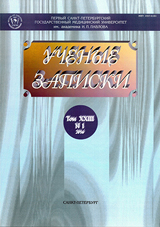
Scientific and practical peer-reviewed journal
The «The Scientific Notes of the Pavlov University» is the official journal of the Pavlov University. It publishes reports on the problems of medical science, practical work and teaching.
In accordance with the resolution of the Higher Attestation Commission (HAC) of the Ministry of Education and Science the journal «The Scientific Notes of the Pavlov University» is included in the list of the leading reviewed scientific journals issued in the Russian Federation and is recommended for publication of the main results of dissertation researches.
Current issue
HISTORY AND PRESENT DAY EVENTS
The article examines the international scientific trips of the teaching staff of the Women’s Medical Institute in the early 20th century, based on institutional records and unpublished archival sources. Special attention is paid to the participation of women physicians in international scientific mobility and the conditions of their inclusion in these processes. The study analyzes the objectives, destinations, and forms of these foreign trips, as well as the institutional mechanisms supporting them. It is shown that the Women’s Medical Institute served as an important hub for international scientific contacts and played a significant role in integrating women physicians into the global scientific community, while simultaneously strengthening the position of Russian medicine on the international stage.
REVIEWS AND LECTURES
The objective was to analyze the literature sources on monitoring and observation of patients with diseases of the gastrointestinal tract (GIT) in daily medical practice using machine learning methods.
Methods and materials. To prepare the review, scientific publications were searched in databases such as PubMed, Web of Science, Scopus, CyberLeninka, eLibrary, and Google Scholar. The search strategy included the use of keywords in Russian and English: «diseases of the gastrointestinal tract», «gastroenterological diseases», «artificial intelligence», «machine learning», «deep learning», «patient monitoring», «remote monitoring». The inclusion of original research in the period 2015–2025 is based on an independent assessment by the authors.
Results. Of the 594 publications, 9 studies meeting the inclusion criteria were included in the final analysis after screening.
Conclusion. AI provides modern approaches to monitoring, diagnosing, and predicting complications of gastrointestinal diseases. The solutions created on its basis are characterized by high diagnostic and forecasting accuracy, often exceeding classical clinical scales, and form the foundation of intelligent decision support systems for doctors.
Infectious complications develop in 82.5% of patients with a gunshot wound, which is one of the main causes of mortality. The increased susceptibility of patients with gunshot wounds to infections is due to the suppressed state of the immune system that develops after injury. Immunological disorders are the consequences of trauma and pose a serious problem in the combined treatment of infectious complications. The general immune response to multiple trauma is a multilevel complex of neurohormonal, cellular, and hemodynamic factors that first lead to excessive activation of the immune system, and then, due to its depletion, to immunosuppression, up to immunoparalysis. Immunoparalysis is characterized by a decrease in the ability of antigen-presenting cells (macrophages and dendritic cells) to perform an antigen-presenting function, providing an adequate response to pathogens and a sharp decrease in T-cells, primarily T helper cells, which regulate the cellular link of immunity. Activation of immunocompetent and functionally related cells in response to trauma leads to hyperproduction of endogenous pro-inflammatory bioregulators, which play a leading role in the development of systemic inflammatory reactions, organ and multiple organ failure. Hyperactivation of the immune system ultimately leads to depletion of secretory activity and death of immunocompetent cells, contributing to the development of immunosuppression. Immune depression is the direct cause of a decrease in the body defenses and the addition of infections caused by opportunistic, usually antibiotic-resistant microorganisms. Thus, the preservation and restoration of immune function is an important strategy, which, along with countering the excessive production of inflammatory mediators, can significantly improve the treatment outcomes of patients with gunshot wounds.
ORIGINAL PAPERS
Introduction. The problem of pressure ulcers remains relevant despite advances in modern medicine. They are a serious medical, social and economic problem, significantly impacting quality of life.
The objective was to evaluate the effectiveness of PRP in patients with pressure ulcers.
Methods and materials. This article presents a randomized controlled trial (n=100). Wound defect status was assessed using the Bates-Jensen Wound Assessment Scale (BWAT). The evaluation criteria were wound duration, wound defect area, proportion of patients with a completely healed wound surface and with an incompletely healed wound surface, percentage of healed wound area, time to complete healing, wound closure rate, complication rate, total epithelialized area and scar quality after healing.
Results. The groups were clinically comparable in terms of age, gender, location, pressure ulcer severity, initial wound area and wound defect duration (p>0.05 for all parameters). PRP therapy significantly accelerated healing: average healing time was 4.5±0.3 weeks compared to 6.6±0.5 weeks in the control group (p=0.001). Complete healing was achieved in 60 % of patients in the PRP group compared to 36 % in the control group (p=0.016; OR=2.67). The wound closure rate in the PRP group was 4.73±2.51 cm2/week compared to 1.14±2.02 cm2/week in the control one (p<0.001). The median wound area reduction was 100 % in the PRP group compared to 19.5 % in the control (p<0.001). The complication rate was significantly lower with PRP: no complications in 55 % compared to 30 % (p=0.009).
Conclusion. PRP therapy significantly accelerates healing. Complete healing was achieved in 60 % of patients in the PRP group compared to 36 % in the control group (p=0.016; OR=2.67). No cases in the PRP group showed an increase in wound size at the end of treatment, compared to 30 % in the control group (p<0.001). Complication rates were significantly lower with PRP: no complications in 55 % compared to 30 % (p=0.009); combined necrosis and infection in 6 % compared to 30 % (OR=0.15). Scar quality after healing was better in the PRP group.
Despite of the rarity of the dorsal pons lesion, it has a highly specific clinical presentation with such heraldic features as unilateral or bilateral lesion of facial and abducent nerve’s nuclei, together with the medial longitudinal fasciculus, which leads to the development of oculomotor dysfunction, and prosoparesis. The presence of additional focal neurological signs depends on the size of the lesion, and the defect in the affected neighboring pontine structures. This article represents some modern data concerning this problem from the literature, and report of 3 clinical cases in which this small zone was affected due to different etiological factors.
Introduction. Patients with malignant neoplasms (MN) and concurrent chronic kidney disease (CKD) stages 3–5 (predialysis) represent a separate, clinically complex group. Diagnostics and specialized anticancer treatment in these patients are associated with significant challenges. Currently, there is a lack of data in Russian literature on the frequency and structure of solid MN incidence in patients with predialysis CKD.
The objective was to assess the detection frequency and risk of developing solid oncopathology in individuals with CKD stages 3–5 using the example of the St. Petersburg population.
Methods and materials. A retrospective population-based study was conducted. A cohort of patients with predialysis CKD stages 3–5 (n=3,046) was formed based on the St. Petersburg nephrological registry as of 31.12.2018. Data on cancer incidence (new cases of solid MN in 2019, n=20,028) were obtained from the St. Petersburg Medical Information and Analytical Centre. In 2019, the population of St. Petersburg was 5,328,890 people. Patients with both diagnoses were identified by cross-matching the databases. The odds ratio (OR) was calculated using SPSS Statistics 22 to assess the risk.
Results. Among 20,028 patients with newly diagnosed solid MN in 2019, 20 (0.1 %) had predialysis CKD stages 3–5. The most common tumors were those of the gastrointestinal tract and urinary system: colon cancer (15 %), prostate cancer (20 %), stomach cancer (10 %), and pancreatic cancer (10 %). The overall risk of developing solid oncopathology in patients with CKD stages 3–5 was statistically significantly higher than in the general population: OR = 1.759.
Conclusions. The risk of developing solid malignant neoplasms is significantly increased in patients with predialysis stages of CKD. The highest risk indicators were noted for tumors of abdominal localization.
TECAR therapy is a modern technology of contact diathermy based on the transmission of high-frequency electromagnetic energy and the achievement of controlled and directed warming of body tissues. A comprehensive assessment of the effectiveness of TECAR therapy was performed in 28 patients (10 men, 18 women, and aged 45 to 72 years) with type 2 diabetes mellitus and clinical manifestations of peripheral neuropathy. A course of 10 procedures of TECAR therapy with acupuncture points was conducted. The severity of the manifestations of polyneuropathy (sensory, motor component, neuropathic pain, sensitive ataxia) was assessed before treatment and 30 days after the course of TECAR. The results obtained demonstrate the effectiveness of TECAR in correcting the manifestations of diabetic peripheral neuropathy, in particular, reducing neuropathic pain, reducing sensory deficit, and reducing the manifestations of sensory ataxia (p<0.05).
Introduction. Recent studies have confirmed the effectiveness of positron emission tomography combined with computed tomography (PET/CT) using radiolabeled ligands of fibroblast activation protein inhibitors (FAPI) for the visualization of malignant lesions (ML) and benign lesions (BL).
The objective was to evaluate the diagnostic utility of dual-phase PET/CT with 68Ga-FAPI-04 in patients with focal liver lesions of varying etiology.
Methods and materials. The study enrolled 62 patients with focal liver lesions of diverse etiologies for the purpose of differential diagnosis (20/62 patients) and pretreatment staging (42/62 patients). 68Ga-FAPI-04 PET/CT imaging was performed in two phases: Phase I (PET/CT20) – imaging began 20 minutes after administration of 68Ga-FAPI-04 (limited to the abdominal region); Phase II (PET/CT60) – 60 minutes after injection, performed as a «Whole-body» scan. Image analysis included visual assessment and calculation of the maximum standardized uptake value (SUVmax) over the lesion areas.
Results. Comprehensive clinical and imaging evaluation identified a total of 128 focal liver lesions. At the early-phase PET/CT scan (PET/CT20), increased 68Ga-FAPI-04 uptake was observed in 109 of 128 lesions (85.2 %): 18 of 25 BL and 91 of 103 ML. A comparable uptake pattern was seen on the delayed-phase scan (PET/CT60): 18 of 25 BL and 93 of 103 ML.
Visual and quantitative analyses of dual-phase 68Ga-FAPI-04 PET/CT demonstrated no significant differences in sensitivity, specificity, and diagnostic accuracy between phase I and phase II for the differential diagnosis of focal liver lesions. Visual assessment yielded values of 88.3 %, 28 %, 76.6 % for phase I versus 90.3 %, 28 %, 78.1 % for phase II. Quantitative analysis of 68Ga-FAPI-04 uptake intensity in hepatic lesions showed corresponding values of 73.8 %, 64 %, 74.2 % for phase I and 68 %, 72 %, 71.6 % for phase II.
Conclusion: Elevated 68Ga-FAPI-04 uptake was observed in the majority of hepatic lesions during both early and delayed imaging phases, irrespective of lesion etiology. Given the absence of significant diagnostic gain between time points, dual-phase PET/CT acquisition appears unnecessary for differentiating the etiology of liver lesions. Quantitative assessment using SUVmax values contributes to improved specificity of 68Ga-FAPI-04 PET/CT in identifying malignant hepatic involvement.
Introduction. Medullary thyroid cancer (MTC) is characterized by a high risk of recurrence in the postoperative period, for the topographic localization of which, standard imaging methods are not sufficiently effective. Determination of the level of calcitonin and CEA is key test for monitoring the appearance of recurrent tumor foci, but does not indicate their localization. Based on the accumulated global experience, it has been established that the most promising methods for determining local recurrence and localization of metastases of MTC are PET/CT with [18F]-DOPA and [68Ga]-DOTA-peptides, however, data on their comparative effectiveness remain controversial.
The objective was to perform an analytical comparison of the diagnostic capabilities of PET/CT with [18F]-DOPA and [68Ga]-DOTA-peptides for the topographic diagnosis of recurrent foci and assessment of the tumor burden in biochemical recurrence of MTC.
Methods and materials. A retrospective analysis of studies of 100 patients with biochemical recurrence of MTC (calcitonin level> 10 pg/ml) who underwent PET/CT with [68Ga]-DOTA-peptides and/or with [18F]-DOPA, including the study of 31 patients with both radiopharmaceuticals. The analysis included an assessment of the number, localization and intensity of the accumulation foci of radiopharmaceuticals, an assessment of the correlation of the basal serum calcitonin level and the results of PET/CT.
Results. In 67 out of 100 patients (67%), recurrent foci were detected using PET/CT. Direct comparison of PET/CT scans with [68Ga]-DOTA-peptides and [18F]-DOPA in 31 patients did not show any statistically significant differences in the number of lesions detected between the two radiopharmaceuticals (Wilcoxon – 1.667, p=0.096). However, in some cases, discordant results were observed: in 2 patients, [18F]-DOPA revealed more foci (in the lymph nodes, liver, and bones), and in 1 patient, [68Ga]-DOTA-peptides showed significantly higher contrast of the foci. With serum basal calcitonin values below 150 pg/ml, tumor foci were detected in almost half of PET/CT patients with both [18F]-DOPA (45 %) and [68Ga]-DOT peptides (42 %). There was only a moderate positive correlation between the level of the cancer marker and the number of detected foci (Spearman 0.47 and 0.35, for [18F]-DOPA and [68Ga]-DOT peptides, respectively, p<0.05) and the total volume of PET-positive tumor tissue (Spearman 0.39 and 0.26, for [18F]-DOPA and [68Ga]-DOT peptides, respectively, p><0.05).
Conclusion. PET/CT with [18F]-DOPA and with [68Ga]-DOTA-peptides are highly informative for the topographic diagnosis of recurrent tumor foci in MTC with comparable diagnostic efficiency. In cases of common forms of MTC, it is preferable to perform a comprehensive PET/CT scan using both radiopharmaceuticals, which will ensure maximum diagnostic accuracy and determine the future strategy of personalized treatment.
Cerebral autosomal dominant arteriopathy with subcortical infarcts and leukoencephalopathy (CADASIL) is pointed out from the group of small vessel diseases and its main feature is considered to be the development of stroke in the absence of well-known cardiovascular stroke risk factors. Nevertheless, such comorbid factors can be present in CADASIL patients. 71 genetically confirmed CADASIL patients were observed, in 31 of whom, a complex investigation including clinical, laboratory, molecular genetic, instrumental and neurovisualization data was performed, and 60 were tested for the presence of variants of polymorphisms in thrombophilic genes to detect their possible significance in development of a cerebral vascular accident. Thrombophilic gene’s testing was also performed in comparison groups including 45 patients with lacunar or small strokes and/or cerebral microangiopathy, and 309 persons who underwent laboratory genetic testing to exclude thrombophilia of a reference group. The results showed presence in CADASIL patients such coexisting stroke risk factors as arterial hypertension in 61.3 %, dyslipidemia in 64.5 %, obesity in 22.6 %, diabetes mellitus in 12.9 %, and smoking in 35.5 %. Other comorbidities included cardiovascular dysfunction presented mainly by cardiac conductive disability in 81.8 %, the signs of connective tissue dysplasia in 50.0 %, migraine in 74.2 %, and autoimmune thyroiditis in 22.6 %. In 78.3% of CADASIL patients, the simultaneous presence of 2-4 pathological alleles was revealed, and the pathological variant 103 G>T in the activated coagulation factor XIII (F13A) (p<0.05) encoding fibrinase was more common compared to the the reference group, which requires further studies as additional non modifiable stroke risk factors in CADASIL patients.
The current understanding of movement control mechanisms is based on N. A. Bernstein’s theory, which describes the hierarchical structure of motor regulation and serves as a fundamental basis for the analysis of neuropsychomotor functions. The study of motor function in individuals with intellectual disabilities is of particular interest and, at the same time, challenging due to the fact that this disorder is characterized by damage to the cerebral cortex, pathological inertia of cortical processes, impaired neurodynamics, and decreased sensory system functionality, which significantly impacts the formation of motor patterns. Evaluation of the functional state of the levels of movement construction in this nosological group is relevant, as is the multidimensional analysis of motor function, which is possible through confirmatory factor analysis of this theoretical concept.
Methods and materials. The study involved 160 children aged 12 at the start of the study and 16 at the end. They were divided into 4 groups: 2 groups of individuals with intellectual disabilities and 2 groups of individuals with typical development. Using N. A. Bernstein’s level theory, a model was developed, including 18 neuropsychomotor tests distributed across 13 test studies, and a confirmatory factor analysis was conducted using Jamovi 2.6.44.
Results. The greatest difficulties in organizing movement in individuals with intellectual disabilities were identified at level B, indicating that movement synergies at the thalamo-pallidal level encompass a broader range of possible movement problems.
Conclusions. Individuals with intellectual disabilities have higher overall severity scores across all factors, which may reflect a qualitatively different (weaker) mechanism for regulating motor actions compared to individuals with typical development.
Introduction. The use of universal reference intervals for biochemical parameters without considering age may lead to systematic errors in the interpretation of laboratory results in elderly and senile patients, especially in the setting of a multidisciplinary hospital.
The objective of this study was to develop age-specific reference intervals for key biochemical parameters – creatinine, urea, and total protein – in patients of a multidisciplinary hospital.
Methods and materials. The research was conducted at the Clinical Diagnostic Laboratory of the City Multidisciplinary Hospital № 2 in St. Petersburg using retrospective data from 2024. More than 5,500 patients were included and divided into three age groups: 35–59, 60–74, and 75 years and older. Analytical measurements were performed on the Abbott Architect c8000 analyzer using standard methods. Reference intervals were calculated using the improved Hoffmann method, and the Kosmic model with covariate adjustment.
Results. The obtained intervals demonstrated a significant shift of boundaries compared with the manufacturer’s reference ranges, especially in elderly and senile patients. With increasing age, creatinine and urea levels increased, while total protein values decreased (p < 0.01 for all parameters). These results confirm the necessity of revising and implementing age-specific reference intervals in clinical laboratory practice.
Conclusion: The use of locally adapted reference values will improve the accuracy of biochemical data interpretation, reduce diagnostic errors, and ensure compliance with ISO 15189 requirements.
Introduction. This work presents a strategy for creating a modular nanoplatform for targeted therapy based on chemically modified nanodiamonds.
The objective was to synthesize and investigate a modified nanodiamond, ND-PEG4-N3, containing a reactive azide group (–N3) for subsequent use as the basis of targeted therapy.
Methods and materials. The Steglich esterification was used for the covalent attachment of the ligand. Successful surface functionalization was confirmed by CP/MAS NMR, Fourier-transform infrared spectroscopy, and XPS. Furthermore, the cytotoxicity of both plain nanodiamonds and ND-PEG4-N3 was investigated using the HEK293 cell line.
Results. The presence of the azide group enables the subsequent selective conjugation with target ligands via the azidealkyne cycloaddition reaction. The data obtained confirm the successful chemical modification of the surface of nanodiamonds.
Conclusion. The results confirm that ND-PEG4-N3 is a promising and biocompatible foundation for the development of biomedical materials with the necessary functional potential to create targeted therapy systems.
OBSERVATION FROM PRACTICE
CNS toxoplasmosis is a relatively frequent complication of HIV infection, most commonly involving brain lesions. However, there are only a few publications reporting cases of toxoplasmosis associated myelitis or encephalomyelitis. In this article, we present a rare clinical case of encephalomyelitis in a 53-year-old patient with newly diagnosed HIV infection in the stage of severe immunodeficiency. The patient additionally developed haematological side effects from specific anti toxoplasmosis therapy, which were successfully managed. Despite of the late initiation of etiotropic therapy, clinical, laboratory, and neuroimaging improvement was observed by the 51st day of specific treatment.
The article presents a clinical case of a patient with multifocal brain lesions against the background of septic condition. The difficulties in diagnosis, features of neuroimaging dynamics, as well as the pathophysiological mechanisms of the development of thrombotic microangiopathy and septic embolism, are discussed. Emphasis is placed on the importance of an interdisciplinary approach for the timely diagnosis of infective endocarditis and its neurological complications.
This article presents the algorithm of actions for a doctor when dealing with congenital stridor in an infant, based on a clinical case. Stridor in newborns and infants under one year of age is a symptom most often associated with congenital abnormalities of the upper respiratory tract. The most common cause of this condition is laryngomalacia, which accounts for 45 % to 75 % of all cases of congenital stridor. The presented clinical case highlights the importance of early diagnosis of laryngomalacia and the necessity of timely treatment to improve the prognosis for this pathology.

ISSN 2541-8807 (Online)


